Red Wing Boot Review: Guide to Most Trusted Work Boots
Are you tired of buying cheap work boots that fall apart after a few months? Do you want footwear that combines legendary durability with timeless American style? Red Wing boots have been the go-to choice for workers and style enthusiasts for over a century. These boots promise to last decades, not just seasons. But are they really worth the investment?
In this comprehensive Red Wing boot review, you will discover everything you need to know about these iconic American boots. You will learn about their construction quality, comfort levels, and whether they truly deliver on their promise of lifetime durability. This review covers the most popular models, sizing guidance, maintenance tips, and honest assessments from real users who have worn these boots for years.
Whether you work in construction, need reliable outdoor footwear, or simply want boots that combine rugged functionality with classic style, this guide will help you make an informed decision. Let’s explore what makes Red Wing boots stand out in a crowded market of work footwear.

Key Takeaways:
- Exceptional Build Quality: Red Wing boots feature Goodyear welt construction with triple-stitched seams, allowing them to be resoled multiple times and last for decades with proper care
- Premium American Craftsmanship: Most Heritage models are proudly made in the USA using full-grain leather and traditional construction methods that have been perfected over 100+ years
- Initial Break-In Required: Expect a 2-4 week break-in period where the thick leather feels stiff, but once molded to your feet, these become some of the most comfortable boots you’ll ever own
- Investment Pricing: Red Wing boots cost between $200-$400 depending on the model, which is significantly higher than budget work boots but reflects their lifetime value and resoling capability
- Sizing Runs Large: Most wearers need to size down 0.5 to 1 full size from their regular shoe size, and visiting a Red Wing store for professional fitting is highly recommended
- Versatile Heritage Line: The Heritage collection offers iconic styles like the Iron Ranger and Classic Moc that work equally well on job sites and as casual lifestyle boots
The Red Wing Legacy: Over 115 Years of Boot Making Excellence
Red Wing Shoes started in 1905 in Red Wing, Minnesota. The company built its reputation on one simple promise. They would make boots that workers could depend on. Over 115 years later, that promise still stands strong.
The founder, Charles Beckman, believed that American workers deserved footwear that could withstand the toughest conditions. He focused on quality materials and expert craftsmanship. This philosophy turned Red Wing into an American icon.
Today, Red Wing makes boots for various purposes. Their Heritage line offers classic styles for everyday wear. The Work line provides safety features for industrial jobs. Both lines share the same commitment to durability and quality that made the brand famous.
What sets Red Wing apart is their dedication to traditional manufacturing. Many Heritage boots are still made in their American factories. They use time-tested construction methods that other companies have abandoned. This approach costs more, but it creates boots that can last 20-30 years or longer with proper care.
Understanding Red Wing’s Two Main Boot Lines
Red Wing divides their boots into two distinct categories. Each serves different needs, but both deliver exceptional quality.
The Heritage line focuses on classic boot styles with timeless designs. These boots blend fashion with function. You can wear them to work or out for the evening. Popular models include the Iron Ranger, Classic Moc, and Blacksmith. Heritage boots use premium leathers and traditional construction techniques.
The Work line emphasizes safety and protection for demanding jobs. These boots include features like steel toes, electrical hazard protection, and waterproofing. Work boots meet strict safety standards required on construction sites and industrial settings.
Heritage boots typically cost more because of their premium materials and American manufacturing. Work boots offer practical features at various price points. Both lines use Goodyear welt construction, which means they can be resoled multiple times.
Choosing between these lines depends on your needs. Do you need safety certification for your job? Pick the Work line. Do you want versatile boots that work for multiple occasions? The Heritage line makes more sense. Many Red Wing fans own boots from both categories.
Red Wing Iron Ranger: The Most Popular Heritage Boot

- Meets ASTM Safety Standards: This leather soft toe work boot with HRO designed rubber-EVA Traction Tred outsole is heat, slip, and electrical hazard resistant...
- Soft Toe: Soft toe provides a protective layer of defense from many hazards that may be encountered at a worksite.
- Comfortable & Durable: Made with oiled full grain leather for long-lasting durability. The removable polyurethane footbed gives your feet long-lasting comfort...
The Iron Ranger represents everything great about Red Wing boots. This 6-inch boot was inspired by the miners who worked in Minnesota’s Iron Range. It features a distinctive cap toe design that adds both style and protection.
The Iron Ranger uses Amber Harness leather, which develops a rich patina over time. The leather starts stiff but breaks in beautifully. Brass speed hooks make lacing quick and easy. The cork midsole molds to your foot shape, creating a custom fit.
This boot includes a Vibram mini-lug sole that provides excellent traction. The Goodyear welt construction means you can resole these boots multiple times. Many owners report wearing their Iron Rangers for 10-15 years before needing major repairs.
The Iron Ranger works for various settings. You can wear them to the office on casual Friday. They handle light outdoor work without problems. The style is clean and classic, making them easy to pair with jeans or chinos.
However, the break-in period can be challenging. The thick leather feels very stiff at first. Your feet might hurt during the first few weeks. Push through this period, and you’ll be rewarded with boots that feel like they were made specifically for you.
Red Wing Classic Moc: Comfort Meets Iconic Style
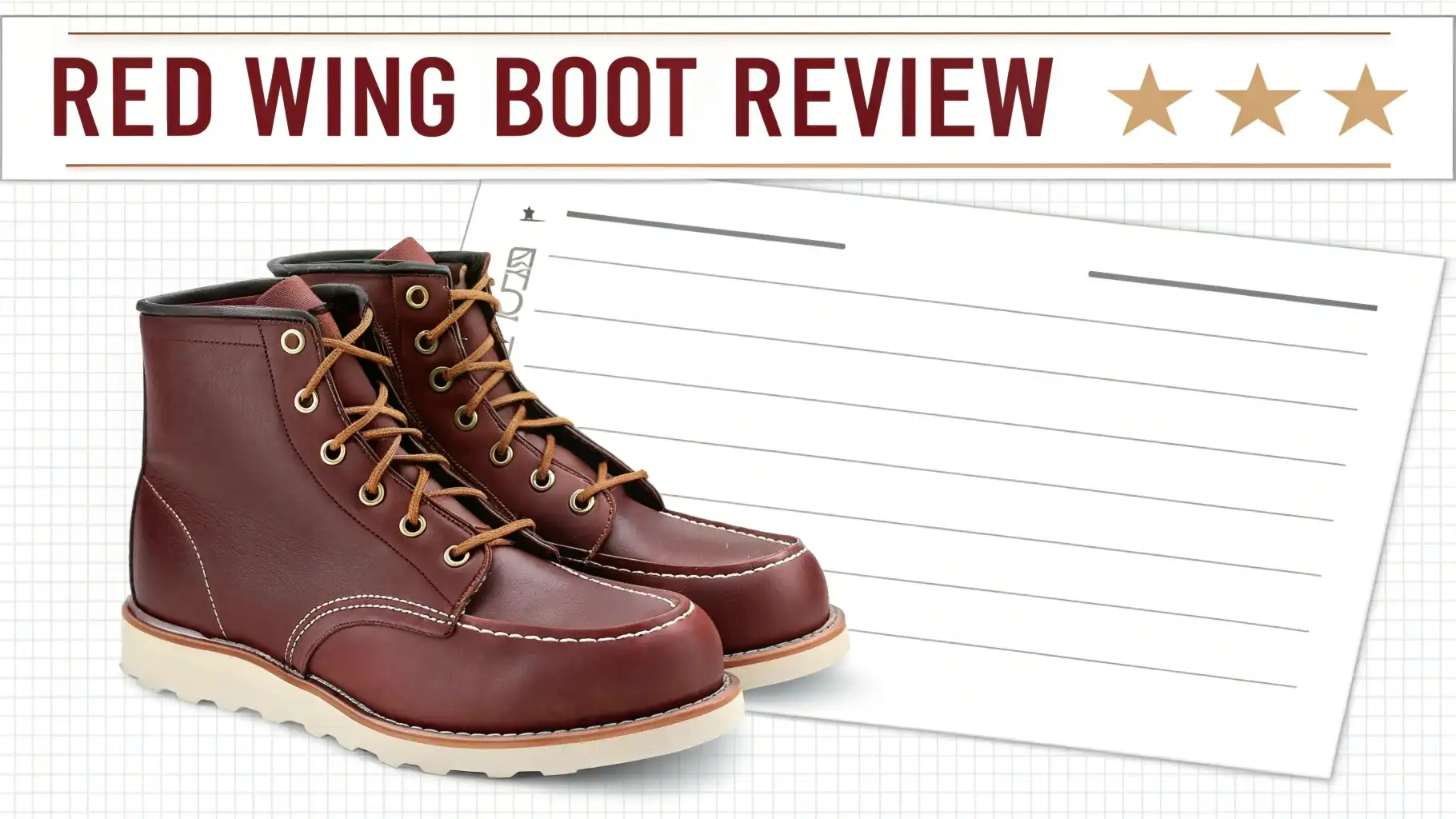
The Classic Moc toe boot is arguably Red Wing’s most recognizable design. First made in 1952, this boot has barely changed in over 70 years. That’s because the original design got everything right.
The defining feature is the moc toe construction with the signature white stitching. This gives the boot a distinctive look that stands out. The Traction Tred wedge sole provides cushioning and comfort. Many wearers say this is the most comfortable Red Wing boot right out of the box.
Classic Mocs come in various heights. The 6-inch version is most popular, but you can also find 8-inch models. The toe box is roomy, giving your toes plenty of space to spread out. This makes them ideal for people with wider feet or those who spend all day on their feet.
The leather used in Classic Mocs is slightly softer than the Iron Ranger. This means a shorter break-in period and immediate comfort. The wedge sole absorbs shock well, making these great for walking on concrete.
These boots suit both work and casual wear. They have a more relaxed, workwear aesthetic compared to the dressy Iron Ranger. Pair them with work pants or casual jeans. The Classic Moc offers versatility that few other boots can match.
Top 3 Alternatives for Red Wing Boots

- closure type: Lace-Up

- AMERICAN MADE with USA and globally sourced components by the skilled craftsmen and women at Thorogood’s US plants
- DURABLE OIL-TANNED FULL-GRAIN LEATHER boots in Thorogood’s moc toe, non-safety toe design are comfortable and hold up to punishing jobs. Available in tobacco...
- MAXWEAR WEDGE TRACTION OUTSOLE flexes better than other work boot outsoles, absorbing impacts and protecting your feet and ankles while working on difficult...

- Anti-Fatigue Technology: A comfort system designed with shock-absorbing, geometrical technology that returns energy back to the foot to deliver all-day support...
- Waterproof Seam-Sealed: Seam-sealed waterproof leather for durable waterproof protection with special tanning that repels moisture for waterproof protection.
- Timberland PRO Rubber: Heat-resistant, durable rubber compound offers enhanced slip, oil and abrasion resistance.
Construction Quality: Why Red Wing Boots Last Decades
Red Wing boots earn their reputation through superior construction methods. The company refuses to cut corners, even when cheaper alternatives exist.
Goodyear welt construction forms the foundation of Red Wing quality. This method attaches the upper leather to the sole using a strip of leather called the welt. The welt gets stitched to both the upper and the sole. This creates a strong, waterproof bond that can be taken apart and rebuilt.
Most cheap boots use cement construction. The manufacturer simply glues the sole to the upper. When the sole wears out, the entire boot is trash. With Goodyear welting, a cobbler can remove the old sole and attach a new one. This process can be repeated multiple times throughout the boot’s life.
Red Wing uses full-grain leather for their uppers. This is the highest quality leather available. Full-grain leather includes the entire thickness of the hide. It’s stronger and more durable than split leather or corrected grain. The leather also develops character over time, looking better as it ages.
The triple-stitch construction adds even more durability. Three rows of stitching hold critical areas together. If one stitch fails, two others remain to hold the boot together. This redundancy prevents catastrophic failures.
Inside each boot, you’ll find a cork midsole and leather insole. The cork compresses and molds to your foot shape over time. This creates a custom footbed that provides excellent support. The leather insole breathes well and lasts much longer than foam alternatives.
Comfort and Break-In: What to Expect
Red Wing boots are not comfortable at first. Let’s be honest about this. The thick, stiff leather feels like cardboard when you first put them on. This is completely normal.
The break-in period typically lasts 2-4 weeks of regular wear. During this time, the leather will soften and conform to your foot shape. The cork midsole will compress in all the right places. The boots will become noticeably more comfortable each day.
Many first-time buyers give up during break-in. They think the boots don’t fit properly. Don’t make this mistake. If the boots fit correctly at purchase, they will break in beautifully. The initial discomfort is temporary.
To ease the break-in process, wear your boots for short periods at first. Start with 2-3 hours, then gradually increase the time. Apply leather conditioner to soften the leather slightly. Wear thick wool socks for cushioning and blister prevention.
Some areas may develop hot spots or pressure points. Pay attention to these areas. If they persist after two weeks, you might need different sizing. But most hot spots resolve themselves as the leather softens.
After break-in, Red Wing boots become incredibly comfortable. The cork midsole provides custom arch support. The leather upper moves naturally with your foot. Many owners report that broken-in Red Wings feel better than sneakers for all-day wear.
The wedge sole models like the Classic Moc feel comfortable almost immediately. The cushioned sole absorbs shock well. These boots require less break-in time than the Iron Ranger or other models with harder soles.
Sizing Guide: Getting the Perfect Fit
Sizing is critical with Red Wing boots. Get this wrong, and you’ll have an expensive mistake that can’t be fixed.
Red Wing boots typically run large. Most people need to size down 0.5 to 1 full size from their regular shoe size. For example, if you wear size 10 in Nike sneakers, you’ll likely need a 9 or 9.5 in Red Wing boots.
Don’t use your sneaker size as reference. Sneakers run large compared to traditional boots. Instead, measure your Brannock size. This is your true foot measurement. Most Red Wing stores have a Brannock device for accurate measuring.
Red Wing boots also come in different widths. Standard width is D. If you have wider feet, you can get E or EE widths. The proper width is just as important as length. A boot that’s too narrow will never feel comfortable, even after break-in.
The best way to size Red Wing boots is to visit a Red Wing store. Their staff specializes in fitting. They’ll measure your feet properly and recommend the right size and width. They’ll also check the fit in multiple ways to ensure accuracy.
When trying on boots, wear the same type of socks you’ll wear normally. Thick wool socks take up more space than thin dress socks. The boots should feel snug but not painful. Your toes should not touch the front. You should have about half an inch of space.
Remember that the leather will stretch slightly. Boots that feel perfect in the store might become too loose after break-in. A slightly snug fit at purchase will feel perfect after the leather softens.
Leather Types and Color Options
Red Wing offers their boots in various leather types. Each leather has different characteristics and requires specific care.
Amber Harness leather is the most popular choice. This oil-tanned leather has a rich, warm color. It develops a beautiful patina over time. Amber Harness is very durable and relatively easy to care for. It’s used in the classic Iron Ranger design.
Copper Rough & Tough is another oil-tanned leather. It has a more rugged appearance with visible grain. This leather shows character quickly. Scuffs and scratches blend into the overall patina. It’s ideal for people who want a worn, vintage look.
Black leather options use chrome-tanned leather. This leather is smoother and more formal looking. It doesn’t develop patina like oil-tanned leathers. Black leather works well for situations where you need a cleaner, more professional appearance.
Briar Oil Slick has a dark, almost purple-brown color. This leather is heavily oiled, making it very water-resistant. It develops a unique character as the oils migrate. The color varies depending on how you flex the leather.
Some boots use Muleskinner leather, which is roughout suede. This leather is extremely durable because the rough side faces out. It handles abuse well but requires different care than smooth leathers.
The color you choose affects both appearance and maintenance. Lighter colors show dirt more easily but develop more visible patina. Darker colors hide dirt better but require careful conditioning to prevent drying.
Maintenance and Care: Making Your Boots Last Decades
Proper care is essential for getting maximum life from Red Wing boots. These boots can last 20-30 years or more with good maintenance.
Regular cleaning is the foundation of boot care. Brush off dirt and debris after each wear. Use a horsehair brush for this. Don’t let dirt build up on the leather. Dirt acts like sandpaper, wearing down the leather fibers over time.
For deeper cleaning, use a leather cleaner specifically designed for boots. Apply it with a damp cloth, working it into the leather. Wipe away excess cleaner and let the boots dry naturally. Never use heat to dry leather boots. Heat causes leather to crack.
Conditioning the leather prevents drying and cracking. Red Wing makes several conditioning products for different leather types. Apply conditioner every few months or whenever the leather looks dry. Use a light, even coat. Too much conditioner can oversaturate the leather.
The type of conditioner matters. Oil-tanned leathers need products like Red Wing Leather Cream or Boot Oil. These products replace the oils that naturally evaporate from the leather. Smooth-finished leathers work better with lighter conditioners.
Pay special attention to the welt and stitching. These areas take the most stress. Keep them clean and conditioned. If you notice loose stitches, get them repaired immediately. Small problems become big problems if ignored.
Store your boots properly when not in use. Use boot trees or stuff them with newspaper to maintain their shape. Store them in a cool, dry place away from direct sunlight. Don’t leave them in hot cars or damp basements.
Red Wing stores offer free cleaning and conditioning for life. Take advantage of this service. Their staff knows exactly how to care for each leather type. They can also spot developing problems before they become serious.
Resoling and Repairs: The Value of Goodyear Welt Construction
The ability to resole Red Wing boots is one of their biggest advantages. This is where Goodyear welt construction really shines.
When your sole wears out, you don’t throw away the boots. Instead, a cobbler removes the old sole and attaches a new one. This process costs around $100-150, depending on the work needed. That’s much cheaper than buying new boots.
Red Wing boots can typically be resoled 3-5 times before the upper leather wears out. Some owners have resoled their boots even more times. Each resole essentially gives you a brand new boot for a fraction of the original cost.
Red Wing offers their own repair service for $150. This includes resoling, heel replacement, minor stitching repairs, new laces, and leather reconditioning. They ship the boots back looking almost new. Many owners use this service to keep their favorite boots in service for decades.
You can also take Red Wing boots to a local cobbler. Any skilled cobbler who understands Goodyear welt construction can resole these boots. This might cost less than Red Wing’s service. However, the cobbler might not have access to original Red Wing soles.
Other repairs are also possible. Broken hooks and eyelets can be replaced. Torn stitching can be repaired. Even significant damage to the upper can often be fixed. As long as the basic structure remains sound, these boots can be restored.
This repairability creates enormous long-term value. A $300 pair of boots might cost another $450 in repairs over 20 years. That’s $750 total for 20 years of wear. Compare that to buying cheap $75 boots every two years. You’d spend $750 just to replace them 10 times, and you’d never get the same quality.
Red Wing Heritage vs Work Line: Which is Right for You
Choosing between Red Wing’s Heritage and Work lines depends on your specific needs.
The Heritage line prioritizes style and versatility. These boots use premium leathers and classic designs. They work for casual wear, office environments, and light duty work. Heritage boots are made in America and cost more. They’re ideal if you want boots that look good anywhere.
Heritage boots lack safety certifications. They don’t have steel toes or electrical hazard protection. If your job requires safety footwear, Heritage boots won’t meet those requirements. They’re designed for style-conscious buyers who still want Red Wing quality.
The Work line focuses on safety and protection. These boots include features like composite or steel toes, waterproof membranes, and slip-resistant soles. They meet ASTM safety standards required on many job sites. Work boots cost less than Heritage models because they’re made overseas.
Work boots have a more utilitarian appearance. They’re designed for function over fashion. That doesn’t mean they’re ugly, but style takes a back seat to practical features. You probably wouldn’t wear Work line boots out to dinner.
Some models blur the line between these categories. The Blacksmith is a Heritage boot that can handle serious work. Some Work boots look stylish enough for casual wear. Research specific models to see which category they truly fit.
If you work in construction or manufacturing, get Work line boots. Your safety matters more than style. If you work in an office or want versatile everyday boots, the Heritage line makes more sense. Many Red Wing fans own both types for different situations.
Price vs Value: Are Red Wing Boots Worth the Investment
Red Wing boots cost $200-400 depending on the model. That’s expensive compared to typical work boots. So are they worth it?
The answer depends on how you calculate value. If you only consider the initial price, Red Wing boots look expensive. But value includes durability, comfort, and lifetime cost.
A $300 pair of Red Wing boots can easily last 15-20 years with proper care. Over that time, you might spend another $300 on resoling and maintenance. That’s $600 total for 20 years of wear. Divide that out, and you’re paying $30 per year for premium boots.
Compare that to cheap $60 work boots. Those typically last 1-2 years before falling apart. Over 20 years, you’d buy 10-20 pairs. That’s $600-1200 total, and you’d never get the comfort and quality of Red Wings.
The real value shows up in daily comfort. Cheap boots hurt your feet, cause back problems, and make long work days miserable. Red Wing boots support your feet properly after break-in. They reduce fatigue and prevent injury. That comfort has real value that’s hard to measure in dollars.
Red Wing boots also hold resale value. Well-maintained used Red Wings sell for $100-200 on secondary markets. Cheap boots have zero resale value. If you ever decide to sell your Red Wings, you can recover some of your investment.
Consider the opportunity cost of cheap boots. How much do foot and back problems cost in doctor visits and lost work time? How much is your comfort worth during a 10-hour shift? These factors make Red Wings an even better value.
If you wear boots occasionally, cheaper alternatives might make sense. But if you wear boots regularly for work or outdoor activities, Red Wing boots deliver outstanding value. The higher initial cost pays for itself many times over.
Common Problems and How to Avoid Them
Red Wing boots are high quality, but problems can still occur. Knowing these issues helps you avoid them.
Poor sizing is the most common problem. Boots that don’t fit properly will never feel comfortable, even after break-in. Take time to get fitted properly. Don’t rush this process. Visit a Red Wing store if possible. Remember that boots should fit snug initially because the leather will stretch.
Insufficient break-in causes many complaints. New owners expect immediate comfort. They get disappointed by the stiff leather and give up too soon. Understand that break-in is normal and necessary. Wear the boots in short sessions initially. The discomfort is temporary.
Lack of maintenance shortens boot life dramatically. Leather needs regular conditioning to stay supple. Dried-out leather cracks and tears. Neglected boots might only last 5-7 years instead of 20+. Spend a few minutes every month on basic cleaning and conditioning. This simple maintenance protects your investment.
Some people experience heel slip during break-in. This happens because the heel area hasn’t conformed to your foot yet. The slip usually resolves as the boot breaks in. If it persists after several weeks, you might need a smaller size or different lacing technique.
Leather splitting at the toe flex point sometimes occurs. This typically happens from walking on your toes too much or from leather that wasn’t conditioned properly. Regular conditioning prevents this problem. If splitting does occur, a cobbler can often repair it.
Sole separation is rare but possible. The Goodyear welt should prevent this, but sometimes the stitching fails or the cement breaks down. This is usually a manufacturing defect covered under warranty. If it happens after several years, resoling will fix it.
Color transfer can occur with darker leathers, especially when new. The excess dye might rub off on light-colored pants. This resolves after a few wears as the excess dye wears away. You can also wipe the boots with a damp cloth to remove surface dye.
What Real Users Say: Customer Reviews and Long-Term Experience
Real-world experience from actual Red Wing owners provides valuable insights.
Many users report wearing their Red Wings for 10+ years. One popular Reddit post documented a pair of Iron Rangers after 10 years of daily wear. Despite heavy use, the boots were still functional. The owner had them resoled once and maintained them regularly. The leather showed beautiful character and patina.
Break-in stories vary widely. Some users describe brutal break-in periods with blisters and pain. Others say their boots felt comfortable within a few days. This variation likely comes from differences in sizing and individual foot shapes. The consensus is that break-in is worth it for the long-term comfort.
Workers in construction and industrial jobs praise Red Wing Work boots for their durability. Many report 2-3 years of daily use in harsh conditions before needing new boots. That’s exceptional for safety work boots. The protective features hold up well to abuse.
Style-conscious buyers love the Heritage line for its versatility. They wear Iron Rangers and Classic Mocs with everything from jeans to business casual outfits. The boots develop character over time, looking better as they age. Many owners consider them investment pieces in their wardrobe.
Some negative reviews mention quality control issues. A small percentage of buyers receive boots with defects like uneven stitching or leather flaws. Red Wing usually resolves these issues through their warranty. However, it’s frustrating to receive defective boots at this price point.
Comfort after break-in receives nearly universal praise. Once the leather molds to your feet, Red Wings become incredibly comfortable. Many owners say they’re the most comfortable boots they’ve ever owned. The cork midsole provides excellent support even during long days on concrete.
The free lifetime cleaning and conditioning service at Red Wing stores gets high marks. Customers appreciate being able to bring their boots in for professional care. This service adds real value and helps boots last longer.
Comparing Red Wing to Other Premium Boot Brands
Red Wing faces competition from several quality boot makers.
Wolverine 1000 Mile boots are Red Wing’s closest competitor. These boots use similar construction and materials. They have a dressier appearance than most Red Wings. Wolverine boots typically cost slightly less. However, many reviewers find Red Wings more durable and better suited to actual work.
Thorogood boots offer excellent value. They use Goodyear welt construction and quality materials at lower prices than Red Wing. Thorogood’s made-in-USA boots cost around $200-250. They’re popular among workers who want resoleable boots without Red Wing’s premium pricing. The main tradeoff is less refined styling.
Timberland PRO boots focus on work applications. They include modern comfort features like anti-fatigue technology. Timberland boots often feel more comfortable immediately. However, they typically don’t last as long as Red Wings. Most use cement construction that can’t be resoled.
Danner boots compete in the outdoor and work boot markets. Danner offers excellent craftsmanship and uses premium materials. Their boots work well for hiking and outdoor activities. Danner boots cost similar to Red Wings. Some models are made in America, while others are imported.
Thursday Boot Company offers affordable alternatives with similar styling. Their boots use Goodyear welt construction and cost around $200. They’re good entry-level options but don’t quite match Red Wing’s durability and quality. The leather and construction are a step below.
Red Wing’s advantages include proven durability, excellent resoling services, free lifetime cleaning, and American manufacturing on Heritage models. Other brands might excel in specific areas like immediate comfort or lower pricing. But few match Red Wing’s overall package of quality, service, and longevity.
Best Red Wing Models for Different Uses
Different Red Wing models suit different purposes.
For general work and versatility, the Classic Moc (875) is hard to beat. The wedge sole provides comfort for all-day wear. The roomy toe box accommodates various foot shapes. This boot works equally well on job sites and casual outings. The Classic Moc breaks in faster than most Red Wings.
If you need style and versatility, choose the Iron Ranger (8111). This boot looks good with nearly any outfit. The cap toe design adds visual interest. Iron Rangers work for smart-casual dress codes and weekend wear. They handle light work but shine as lifestyle boots.
For heavy-duty work, consider the SuperSole series from the Work line. These boots include safety features like steel toes and electrical hazard protection. The comfortable SuperSole provides excellent cushioning on concrete. They meet ASTM safety standards required on many job sites.
Outdoor and hiking activities call for the Roughneck or Blacksmith. These boots offer more aggressive tread than dress boots. The Roughneck has 6 inches of ankle support. Both handle rough terrain well while maintaining Red Wing’s durability standards.
If you work in wet conditions, get boots with waterproof membranes. The 877 has treated leather that resists water. For serious waterproofing, choose Work line boots with Gore-Tex liners. These keep your feet dry in rain and snow.
For professional environments, the Merchant or Williston models offer dressy aesthetics. These boots have sleeker profiles than chunky work boots. The smooth leather looks polished and professional. They’re appropriate for business casual settings.
Budget-conscious buyers should consider the Blacksmith or Weekender. These offer Red Wing quality at slightly lower prices. They’re still resoleable and well-made. The Weekender Oxford provides Red Wing construction in a casual shoe format.
How to Care for Different Red Wing Leather Types
Different leathers require specific care approaches.
Oil-tanned leathers like Amber Harness need regular conditioning. These leathers have oils infused during the tanning process. The oils gradually evaporate over time. Replace them using products like Red Wing Leather Cream or Boot Oil. Apply conditioner every 2-3 months or when the leather looks dry.
Clean oil-tanned leather with warm water and a brush. For heavy dirt, use a leather cleaner designed for oil-tanned leather. Don’t use harsh chemicals or saddle soap. These strip away the protective oils. After cleaning, always condition the leather.
Smooth-finished leather has a more formal appearance. It requires gentler conditioning. Use Red Wing Leather Cream rather than heavy oils. Apply thin coats to avoid oversaturation. Buff the leather with a soft cloth after conditioning to restore shine.
For waterproof and smooth leathers, use specially formulated products. Red Wing makes a Leather Cream designed for these leathers. Apply light, even coats. These leathers already have protective treatments, so don’t oversaturate them with heavy oils.
Roughout and suede leathers need different care. Use a suede brush rather than a horsehair brush. Brush against the grain to lift dirt and restore the nap. Don’t use liquid conditioners on suede. Instead, use a suede protector spray to resist water and stains.
For really tough stains on suede, use a suede eraser. Rub gently on the stain. If that doesn’t work, try a specialized suede cleaner. Test any product on a hidden area first.
All leather types benefit from regular brushing. Brush your boots after each wear to remove surface dirt. This simple habit prevents dirt from grinding into the leather. Keep a horsehair brush by your door for convenience.
Seasonal care matters too. Before winter, apply extra conditioner and waterproofing. Salt and snow are hard on leather. After winter, clean off salt stains and recondition. Before storing boots for summer, clean and condition them thoroughly.
Where to Buy Red Wing Boots and What to Look For
Buying from the right source ensures you get authentic Red Wing boots with full warranty coverage.
Red Wing stores are the ideal buying location. Their staff specializes in fitting and can measure your feet properly. They’ll help you find the right size and width. Red Wing stores also offer free cleaning and conditioning for life. This service adds significant value.
Many authorized retailers also sell Red Wing boots. These include specialty boot stores and some outdoor retailers. Make sure the retailer is authorized by Red Wing. Authorized dealers provide full warranty coverage and can order specific sizes.
Online buying is convenient but risky for sizing. If you already know your Red Wing size, online shopping works fine. Major retailers like Amazon sell Red Wing boots. However, you might receive incorrect sizes or have trouble with returns. The lack of fitting expertise is a significant disadvantage.
If buying online, check the return policy carefully. Make sure you can return boots for a full refund if the sizing doesn’t work. Try boots on indoors on carpet. Walking outside might prevent returns.
Used Red Wing boots can offer value if you know what to look for. Check the sole wear. If the sole is heavily worn but the upper is good, factor in resoling costs. Examine the leather for cracks or tears. Check all stitching for integrity. Used boots that have been well maintained can last many more years.
Avoid counterfeit Red Wing boots. These appear on discount websites and marketplaces. Real Red Wing boots have specific construction features. Check for Goodyear welt stitching. Examine the leather quality. If the price seems too good to be true, it probably is.
When buying, look for quality indicators. The stitching should be even and tight. The leather should feel thick and substantial. The sole should be firmly attached with visible welt stitching. Any irregularities might indicate defects or counterfeits.
Frequently Asked Questions
How long does it take to break in Red Wing boots?
The break-in period for Red Wing boots typically lasts 2-4 weeks of regular wear. During this time, the thick leather softens and conforms to your foot shape. The initial discomfort is normal and temporary. Wearing the boots for short periods initially and using leather conditioner can speed up the process. Once broken in, Red Wing boots become incredibly comfortable.
Should I size down in Red Wing boots?
Yes, most people need to size down 0.5 to 1 full size from their regular shoe size. Red Wing boots run larger than typical footwear. The leather will also stretch slightly during break-in. Visit a Red Wing store for professional fitting using a Brannock device. Don’t base your size on sneakers, as they run large compared to traditional boots.
Can Red Wing boots be resoled?
Yes, Red Wing boots feature Goodyear welt construction that allows them to be resoled multiple times. Most boots can be resoled 3-5 times before the upper leather wears out. Red Wing offers a complete repair service for around $150 that includes resoling, reconditioning, and minor repairs. Local cobblers can also resole Red Wing boots.
Are Red Wing boots waterproof?
Most Red Wing Heritage boots are water-resistant but not fully waterproof. The thick leather repels light moisture but will eventually soak through in heavy rain. Some Work line models include waterproof membranes like Gore-Tex. You can improve water resistance by applying waterproofing treatments and conditioning the leather regularly.
How often should I condition Red Wing boots?
Condition your Red Wing boots every 2-3 months with regular wear, or whenever the leather looks dry. Oil-tanned leathers like Amber Harness need more frequent conditioning than smooth-finished leathers. Use products specifically designed for your leather type. Red Wing stores offer free lifetime cleaning and conditioning services.
Do Red Wing boots run wide or narrow?
Red Wing boots come in multiple widths, with D being standard width. The Classic Moc models have a particularly roomy toe box that accommodates wider feet. The Iron Ranger runs more narrow. If you have wide feet, consider ordering E or EE widths. Professional fitting at a Red Wing store ensures you get the right width.
How long do Red Wing boots last?
With proper care and maintenance, Red Wing boots can last 15-30 years or longer. Many owners wear their boots for decades by resoling them multiple times and conditioning the leather regularly. The Goodyear welt construction and full-grain leather enable this exceptional longevity. Cheap boots typically last only 1-2 years in comparison.
Are Red Wing Iron Rangers good for work?
Iron Rangers work well for light-duty work but lack safety certifications for heavy industrial jobs. They don’t have steel toes or electrical hazard protection. The cap toe provides some protection, but not enough for construction sites requiring ASTM-certified footwear. For serious work, choose Red Wing’s Work line instead.
What is the most comfortable Red Wing boot?
The Classic Moc (875) is generally considered the most comfortable Red Wing boot, especially during break-in. The wedge sole provides excellent cushioning and shock absorption. The roomy toe box accommodates various foot shapes. After break-in, most Red Wing models become very comfortable, but the Classic Moc offers the easiest transition.
Why are Red Wing boots so expensive?
Red Wing boots cost more because of superior materials and construction. They use full-grain leather, Goodyear welt construction, and traditional manufacturing methods. Heritage models are made in America by skilled craftsmen. The boots can be resoled multiple times, making them cheaper over their lifetime than disposable work boots. You’re paying for decades of wear, not just one pair of boots.

I created Bloom Boost because I believe everyone deserves access to honest, comprehensive product information. Too often, we’re bombarded with marketing claims that don’t match reality. My goal is to cut through the noise and provide you with the real truth about products that promise to enhance your beauty and wellness journey.
Last update on 2026-03-02 / Affiliate links / Images from Amazon Product Advertising API